Home › Concrete Slab Foundations and Flatwork
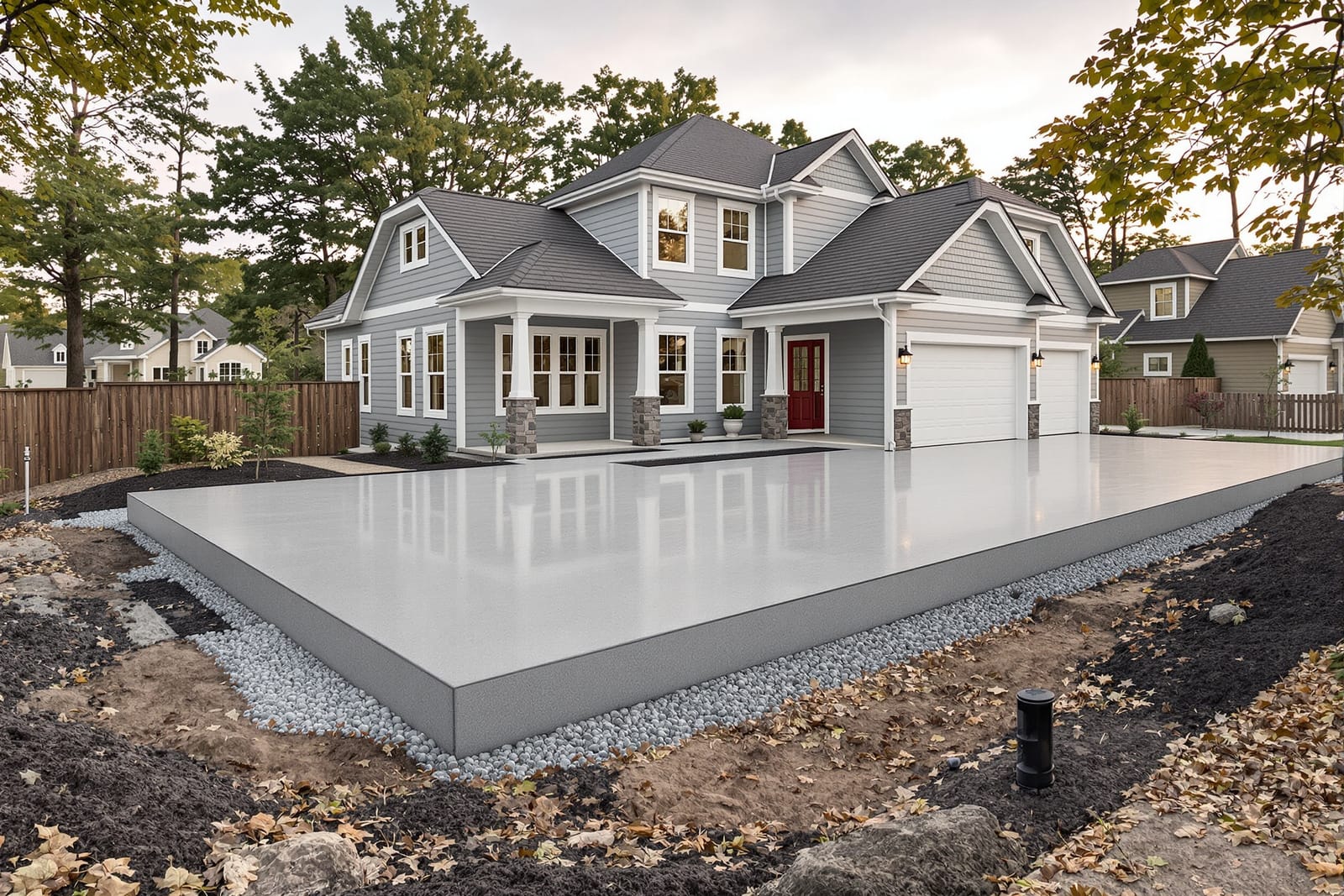
Superior Concrete Durham pours concrete slabs and flatwork for a variety of residential projects in Durham, NC. From house and garage slabs to sheds and patios, we prepare the base, reinforcement, and concrete mix for a stable, long lasting surface.
Superior Concrete Durham provides professional concrete slab throughout Durham, NC, North Carolina and the surrounding area. Our licensed, insured crew delivers safe, clean, on-time work with a free estimate before anything begins. Call (984) 384-5856 or request your free quote.
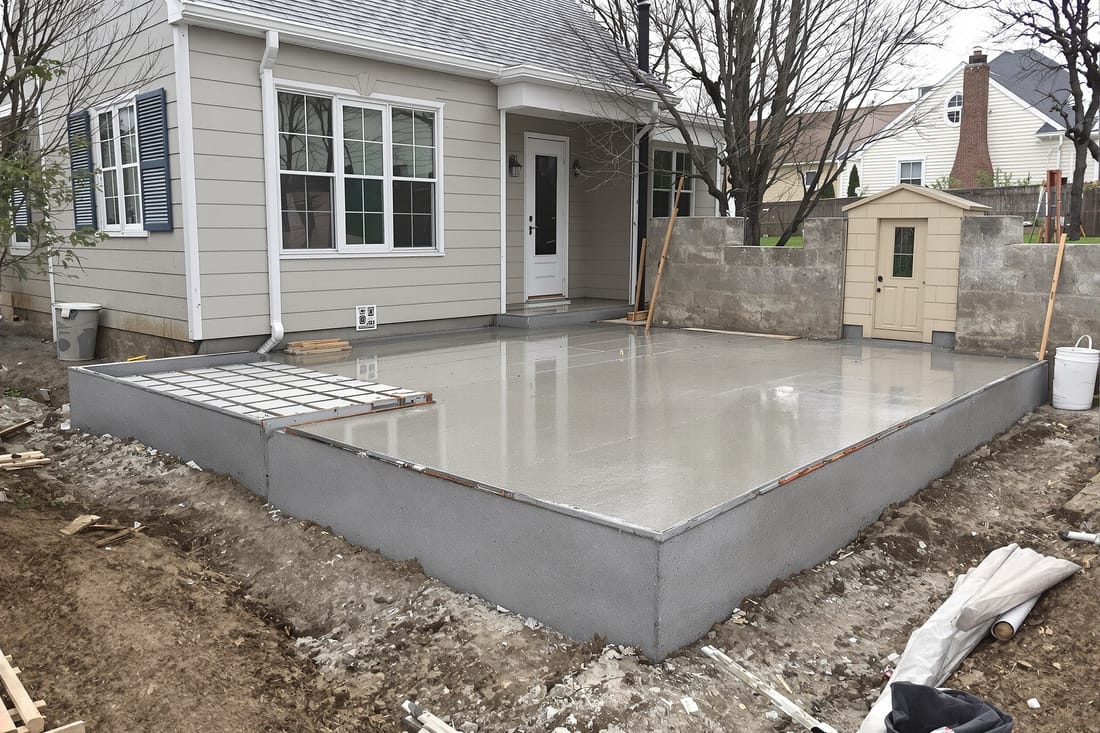
Concrete slab foundations and flatwork done for Durham’s soil and weather
Concrete slab work in Durham, NC is not one-size-fits-all. Our red clay, tree roots, and wet summers are tough on poorly built slabs. At Superior Concrete Durham, we focus on designing concrete slab foundations and flatwork that match your actual site conditions, not a generic plan.
For foundations, we start with a site visit. We check soil type, moisture, slope, drainage patterns, and nearby trees. In many Durham neighborhoods, especially where the topsoil is thin over hard clay, we plan for extra base prep so the slab does not heave or settle unevenly. If the area holds water after a rain, we address drainage before we even think about pouring concrete.
For flatwork like driveways, patios, walkways, and floor slabs in garages or shops, we look at how you will use the space. Vehicle weight, grill or fire pit locations, planned hot tubs, or heavy tools in a workshop all change how thick the slab should be and what reinforcement we recommend. Our goal is to build something that matches your use, not just hit the minimum code requirement.
Durham’s temperature swings are not extreme compared to some parts of the country, but freeze-thaw cycles still matter. We choose mix designs and joint layouts that let the slab move a little without cracking all over. That is the difference between a smooth slab that lasts and a patchwork of repairs in a few years.
How we build a slab foundation or flatwork from the ground up
Every good concrete slab starts underneath the concrete. We begin with excavation and grading, cutting down to the design elevation and removing soft spots, topsoil, roots, and organic material. Leaving roots or loose fill under a slab is one of the fastest ways to get cracks and sinking.
Next is the base. In most Durham projects we install and compact a layer of crushed stone or gravel to improve drainage and support. The thickness depends on soil conditions and load. For example, a backyard patio on firm clay might get a 4 inch gravel base, while a driveway or shop floor that sees trucks could need 6 inches or more.
If the slab will be part of a living space or is prone to moisture, we add a vapor barrier (usually 6 mil plastic or thicker) over the compacted base. This helps control moisture transmission from our often damp North Carolina ground, which is important for floor coverings like wood, vinyl, or carpet.
Then we set forms using lumber or metal edges pinned into the ground, checking elevations with a laser level. This controls the slab thickness and gives us the finished height at door thresholds, garage entries, or transitions to existing concrete.
Reinforcement comes next. For most slab foundations and structural slabs, we use rebar in a grid pattern sized to the slab thickness and expected loads. For light-duty flatwork, we may use wire mesh or fiber-reinforced mixes. On sloping sites or where we expect movement, we tighten spacing or step up to larger rebar sizes. All of this is decided before the pour, so there are no surprises once the truck is onsite.
Mix design, thickness, and finishing options that actually matter
Concrete slab performance depends on getting the mix and thickness right. Typical flatwork in Durham uses a 3000 to 4000 psi mix. For garage slabs, heavy driveways, or workshop floors that will see equipment or lifts, Superior Concrete Durham often specifies 4000 psi or higher for better durability and abrasion resistance.
Slab thickness is not guesswork. A basic patio for foot traffic is usually 4 inches thick. Standard driveways are also often 4 inches, but for heavier vehicles or steep hillsides we may recommend 5 to 6 inches and tighter reinforcement. Slab foundations for additions or detached garages are typically 4 to 6 inches thick, with thickened edges or footings around the perimeter and under load-bearing walls.
Finish choices affect safety and maintenance. Broom-finished concrete is common for driveways and walkways because it provides traction when it rains or when pollen makes surfaces slick. For patios and interior slabs, we can provide a smooth trowel finish, a light broom, or decorative options like exposed aggregate or stamped patterns. In Durham’s humid climate, we are careful with very smooth exterior finishes because they can get slippery with algae or mildew if the area is shaded.
We also offer integral color, stains, and sealers. On outdoor slabs, we use breathable sealers that handle moisture vapor so you do not end up with peeling or white haze. For interior slabs that will stay exposed, like modern basements or studios, we adjust our finishing approach to control surface flatness and appearance so you have a better-looking floor once polished or sealed.
Preventing and handling cracks, drainage issues, and slab movement
All concrete cracks, but good planning controls where and how it happens. At Superior Concrete Durham we lay out control joints (sawn or tooled lines in the concrete) in a grid based on slab thickness and shape, typically spacing them no more than 2 to 3 times the slab thickness in feet. For example, a 4 inch slab usually gets joints 8 to 12 feet apart. We avoid long skinny sections and odd shapes that tend to crack unpredictably.
Durham’s clay soils swell when wet and shrink when dry. To handle this, we pay close attention to grading and water runoff. We slope exterior slabs away from the house or building and often add drainage solutions such as french drains or yard drains if the site tends to hold water. Keeping water from pooling along slab edges is key to reducing movement and edge cracking.
We use appropriate curing methods to improve strength and reduce early cracking. That can mean spray-on curing compounds, covering with plastic, or light watering for several days, depending on the season and project type. Rushing curing or letting a fresh slab bake in the sun is a common cause of surface cracking and dusting.
If you already have a slab with problems like settlement, trip hazards, or extensive cracking, we will first figure out why it failed. In some cases we can correct minor issues with joint sealing, surface overlays, or, for certain types of settlement, slab lifting by a specialized partner. In other cases, especially where the base was never properly built, replacement is the only sensible fix. We explain the pros, cons, and long-term outlook so you are not paying to patch concrete that will keep moving.
Costs, scheduling, and what to expect when you hire us
Concrete slab pricing in Durham, NC depends on several real-world factors: access for trucks and equipment, thickness, reinforcement, base requirements, decorative finishes, and site conditions like slope and drainage. A simple backyard patio on a flat, easy-to-access lot will be less than a driveway on a steep hill that needs extra base and thicker concrete.
Superior Concrete Durham typically provides a written estimate that breaks out major components: demolition of any existing concrete, base prep, forms, reinforcement, concrete and pump (if needed), finishing, and sealing if requested. This helps you see where money is going and compare realistic bids, not just the bottom line.
On scheduling, many residential slab and flatwork projects take 1 to 3 days onsite, plus curing time. Day 1 is usually excavation, base, and forms. Day 2 is pouring and finishing. Larger or more complex jobs may add a day for prep or for sawcutting control joints. You can usually walk on a new slab within 24 to 48 hours, but vehicle traffic should wait at least 5 to 7 days, sometimes longer for heavy loads.
We coordinate inspections when required, such as for slab foundations on additions or garages that are permitted through the City of Durham or Durham County. Our team is used to local building department standards and typical inspector expectations, including vapor barriers, reinforcement placement, and footing dimensions.
Before you hire any contractor for concrete slab foundations and flatwork, ask about insurance, references for similar local jobs, and how they handle drainage and control joints. A low price that skips base compaction or uses thin concrete costs more in the long run. When you work with Superior Concrete Durham, you get a crew that does this work every day in your specific soil and climate, with a clear plan for both the visible slab and the unseen ground that supports it.