Home › Commercial Concrete Slabs and Flatwork
Superior Concrete Durham pours commercial concrete slabs and flatwork for warehouses, shops, and other facilities in Durham, NC. We place reinforced, high strength concrete designed for forklift and heavy equipment traffic. From interior floors to exterior loading pads and aprons, we deliver flat, durable surfaces with professional joint layouts.
Superior Concrete Durham provides professional commercial concrete slab throughout Durham, NC, North Carolina and the surrounding area. Our licensed, insured crew delivers safe, clean, on-time work with a free estimate before anything begins. Call (984) 384-5856 or request your free quote.
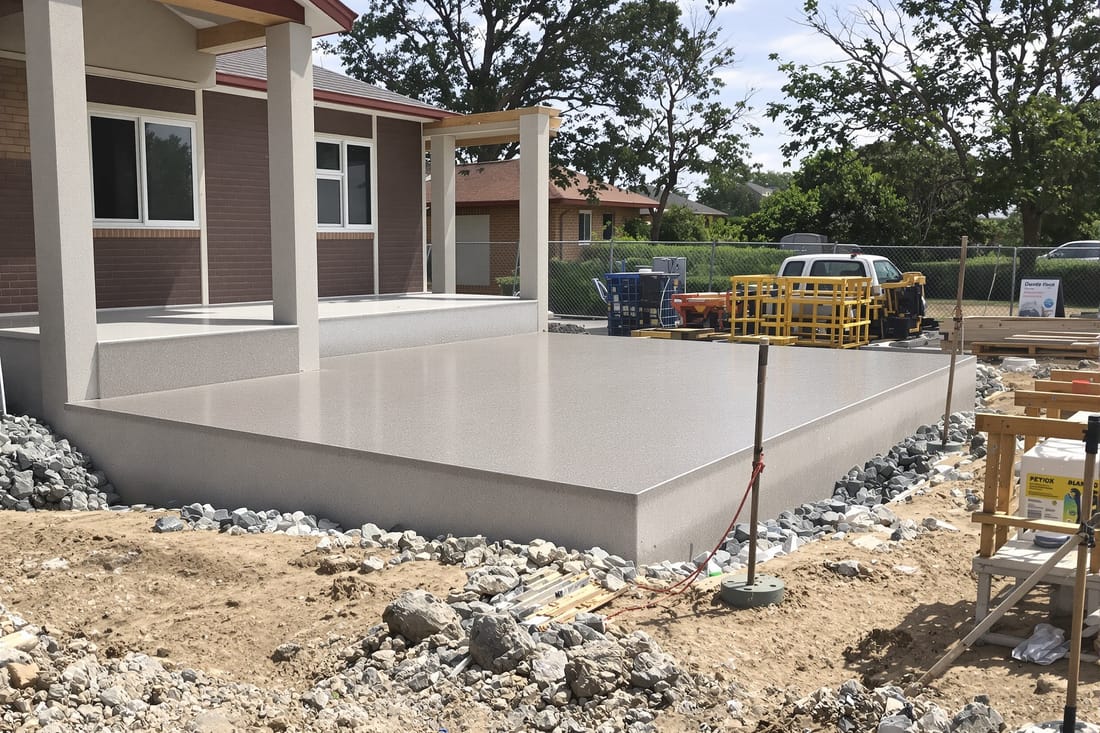
Durham commercial slab work built for real-world loads
At Superior Concrete Durham, commercial concrete slabs and flatwork are not side projects. They are the structural surface your business depends on every day. From warehouse floors in Research Triangle Park to retail pads along Hillsborough Road, we design each commercial concrete slab around the loads, traffic patterns, and soil conditions on your specific site in Durham, NC.
A proper commercial concrete slab starts with the use case. We ask about racking systems, forklift types, point loads from equipment, expected foot traffic, and any plans for future expansion. A light retail slab that supports shelving and customers is not designed the same way as a distribution center that runs 8,000 pound forklifts or a medical facility that needs precise flatness for sensitive equipment. By matching slab thickness, reinforcement, and joint layout to the way you will actually use the space, we significantly reduce cracking, curling, and maintenance issues over the life of the building.
Our crew is familiar with the specific clay soils and moisture swings found across Durham County. Those local conditions directly inform how we prep the subgrade, which stone base we specify, and how we manage drainage so your slab does not move or heave over time. The result is commercial flatwork that performs in real Durham conditions, not just on paper.
How we build durable commercial concrete slabs and flatwork
Every successful commercial concrete slab in Durham begins below the concrete. We start with stripping organic material, soft pockets, and construction debris. The subgrade is then compacted in controlled lifts, usually using a plate tamper or roller, and tested so we know it meets density requirements for the loads you expect. Where soils are expansive or weak, we may over-excavate and replace with compacted stone or use geotextile to stabilize.
On top of the prepared subgrade we place a graded aggregate base, typically crushed stone, compacted to a uniform thickness. This base helps with drainage and limits differential settlement. We then install vapor barriers or vapor retarders where needed, especially under interior slabs that will receive flooring, to reduce moisture transmission that can damage adhesives and finishes.
Formwork is set to precise elevations with laser levels to achieve the slab thickness and slopes specified in the design. For interior slabs we often target very low slopes to keep floors level, while exterior flatwork such as loading docks, dumpster pads, and walkways need accurate fall so water drains away from buildings. Expansion and control joints are laid out before the pour, since their spacing and pattern strongly influence how and where the concrete will crack.
Reinforcement is placed according to use. We may use rebar grids, welded wire mesh, or fiber reinforcement, and for higher load applications we often combine them. The reinforcement is supported on chairs so it stays in the correct position in the slab, not dropped to the bottom where it does very little work. Only after all this is verified do we schedule a ready mix delivery with the appropriate mix design for your project.
Mix designs, finishes, and flatness options for your project
Commercial concrete slab performance has a lot to do with the mix and finish, not just thickness. For Durham projects, Superior Concrete Durham typically specifies a mix in the 3,500 to 5,000 psi range depending on the structural needs and exposure. High traffic warehouse slabs might use a higher strength and lower water cement ratio to resist abrasion and heavy loads. Where deicing salts or chemical exposure is expected, we may include supplementary cementitious materials to improve durability.
For interior floors that need very tight tolerances, such as distribution centers with narrow aisle racking, we can target specific FF (floor flatness) and FL (floor levelness) numbers. That requires careful strike off with laser screeds or straightedges, steady pacing of the pour, and experienced finishing crews who understand how to avoid overworking the surface.
Finish options are selected based on safety and aesthetics. Broom finishes are common for exterior commercial flatwork like sidewalks and loading areas because they improve traction during Durham rain and winter freeze thaw cycles. For interior commercial slabs, we often machine trowel to a smooth or lightly textured finish, then later densify and polish if the space demands a finished concrete floor. Where forklifts operate, we pay particular attention to joint detailing and surface texture to reduce tire wear and operator fatigue.
We can also integrate color hardeners, integral color, or saw cut patterns for tenant entrances, plazas, and public facing exterior slabs. These decorative options are installed with the same structural discipline as our industrial flatwork so they look good and hold up under real commercial use.
Scheduling and curing in Durham’s climate
The Piedmont climate around Durham gives us a relatively long window for commercial concrete slab work, but temperature and humidity still matter. Pouring in the hottest part of a July afternoon can cause rapid surface drying and plastic shrinkage cracking, while winter mornings that start below freezing require additional measures to protect the concrete. At Superior Concrete Durham we adjust schedule, mix design, and curing methods to match actual weather forecasts, not just typical conditions.
Spring and fall are often ideal for larger slab pours because moderate temperatures allow more predictable set times and finishing windows. In summer we may pour earlier in the morning, use set control admixtures, increase fogging and evaporation control, and apply curing compounds quickly to keep hydration uniform. In colder weather we might use warm water in the mix, accelerators, insulated blankets, and windbreaks to maintain proper curing temperatures.
Curing is not optional if you expect long service life from a commercial concrete slab. After finishing, we typically apply a curing compound or initiate a wet curing regimen to hold moisture in the slab for at least the first several days. Proper curing significantly improves strength, abrasion resistance, and reduces the risk of early age cracking and surface dusting. We communicate clear curing and traffic timelines so you know when foot traffic, light equipment, and full forklift or vehicle loading can safely begin.
Cost drivers and how to control your commercial slab budget
Commercial concrete slab pricing in Durham, NC is driven by more than just square footage. Thickness, reinforcement type, subgrade conditions, access for trucks and equipment, and specified flatness all play major roles. A 4 inch exterior sidewalk with a broom finish is a very different cost profile than a 7 inch warehouse slab designed for heavy rack loads and constant forklift traffic.
Subgrade and base preparation are often the largest variables. If your site has been recently graded and compacted with testing, costs tend to be more predictable. If we encounter soft spots, old fill, organics, or utility conflicts, we will recommend remediation so the slab does not fail later. Investing in proper base work is usually less expensive than repairing settled or cracked slabs after a business is already operating.
Access is another cost factor. Sites where ready mix trucks can back directly to the pour area and where there is room for equipment and staging are more efficient. Tight urban infill sites in central Durham may require concrete pumps, additional labor for placing and finishing, and more complex logistics. We walk each site before finalizing a proposal so you have a realistic number tied to your actual conditions.
Superior Concrete Durham helps control costs by aligning design level with real needs. For example, not every tenant improvement requires an F-min level floor or thickened sections everywhere. By understanding how you will use each area, we can focus higher performance specifications where they matter, and keep straightforward flatwork simple and economical.
Common slab problems and how we prevent them
Most commercial concrete slab failures are predictable and avoidable if you know the warning signs during planning. Frequent issues in the Durham area include random cracking, slab curling at joints, surface dusting, ponding water, and joint spalling under forklift traffic. Our approach at Superior Concrete Durham is to design and build with these potential problems in mind from day one.
Random cracking is usually a symptom of inadequate joint spacing, lack of reinforcement, or poor curing. We calculate appropriate joint spacing based on slab thickness and dimensions, then cut joints at the right depth and timing. In some cases we will use early entry saws to create joints before shrinkage stresses build. Reinforcement and careful curing further control how cracks develop so they remain tight and non-structural.
Curling at joints often occurs when the slab dries and shrinks at different rates between the top and bottom. This is influenced by base uniformity, moisture gradients, and concrete mix design. We work to keep base moisture reasonably consistent, select mix designs that limit excessive shrinkage, and in critical applications we may use thicker slabs or distributed reinforcement to resist curling.
Surface dusting and scaling typically indicate improper finishing or inadequate curing, especially if finishing was done while bleed water was still present on the surface. Our finishers are trained to wait for the correct finishing window and to use proper tools and passes so the surface is dense and strong. By combining disciplined placing and finishing practices with job appropriate curing methods, we greatly reduce the chance of these common issues.
For joints that will see heavy forklift traffic, we pay attention to load transfer and edge protection. This may include dowels, armored joint systems, or careful detailing and filling of saw cuts. That additional effort up front helps prevent joint breakdown that can disrupt operations later.
What Durham businesses should clarify before hiring a concrete contractor
Choosing a contractor for your commercial concrete slab is a structural decision, not just a cosmetic one. Before you hire anyone in Durham, ask for specific examples of similar commercial slab or flatwork projects, not just residential driveways or patios. Superior Concrete Durham can provide references for warehouses, retail centers, and office or institutional projects where we have installed large slabs, loading docks, dumpster pads, and walkways.
You should expect a written scope that defines slab thicknesses, reinforcement type and spacing, concrete strength, joint layout, finish type, curing method, and testing or inspection responsibilities. Vague proposals that only mention square footage and price leave you exposed to cut corners and change orders. We spell these items out so you know exactly what you are purchasing.
Confirm how your contractor will handle layout, inspections, and coordination with other trades. Slabs that will receive machinery anchors, plumbing, electrical conduits, or floor drains require close communication with other contractors so those elements end up in the right locations and do not interfere with reinforcement. Our team participates in pre pour meetings and walks the slab area with you and your other trades to reduce conflicts and surprises.
Finally, ask about post installation support. Even a well built commercial slab may show hairline cracking or other normal signs of curing over time. We explain what is expected versus what is a concern, and we remain available to evaluate any issues and recommend maintenance or repair solutions if needed. When you choose Superior Concrete Durham, you are choosing a contractor that understands commercial concrete slabs and flatwork from design through years of actual use in Durham’s conditions.